
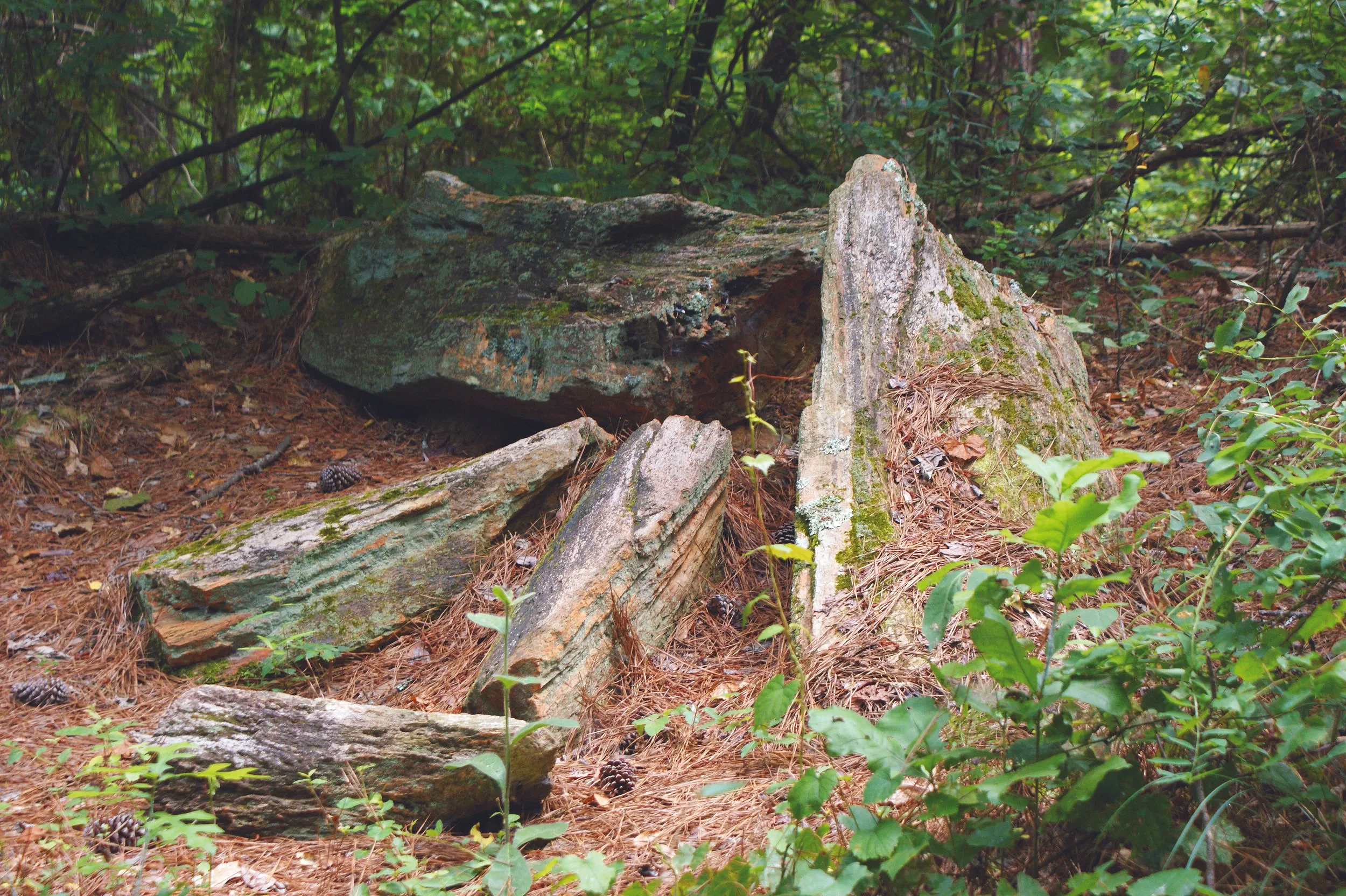
Established 36 Million Years ago…
Preserved since 1963!

Our Story
The existence of this Petrified Forest has been known since the middle 1800’s, but only within the past six decades has it been developed and opened for the public.
Prior to 1962, this petrified forest was totally unprotected and thought by many to be abandoned. During those years, many tons of petrified wood were hauled away, and extreme damage was done to the remaining visible logs.
The property was acquired by R.J. "Bob" and Shirl Schabilion in 1962. Preservation began immediately and the park was opened for visitors in 1963. Had this not been done, there would be no Petrified Forest here today—probably no trace of any petrified logs.
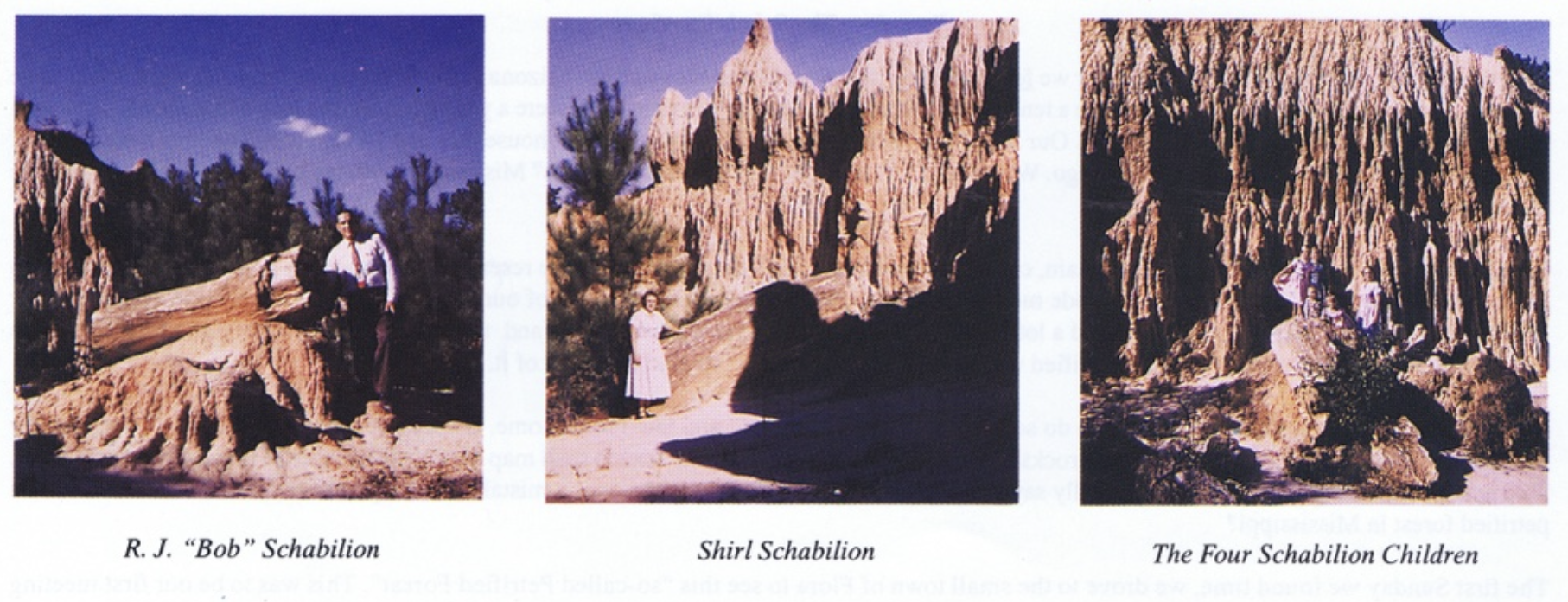
By example to their family and to others, the Schabilion family taught the values and practicalities that are to be found in conserving and preserving all of our natural resources—and this was in a time long before the word “conservation” came into common use, as it is today.
As a result of these conservation efforts, the Mississippi Petrified Forest was recommended by the National Park Service to be designated a Registered National Landmark. Since 1966, the Mississippi Petrified Forest has been recognized for the voluntary conservation of a site which “possesses exceptional value in illustrating the Natural History of the United States.”

“Our hope is that you, the visitor, will help us in preserving this one-of-a-kind, extraordinary natural creation so that we can insure that many generations still to come may marvel at this unique glimpse back into prehistoric time.”
- Shirl Schabilion, Co-Founder

How the Petrified Forest Formed
The Mississippi Petrified Forest is a fascinating place, located in hills with ravines hollowed out by nature during the past century. The size of the petrified logs indicates that as living trees, these stone giants were over one hundred feet tall, and perhaps a thousand or more years old.

Cartoon drawn for the Mississippi Petrified Forest by artist Alvin B. Hale.
36 million years ago, a roaring, thunderous, flood-swollen river snatched everything in its path. Flowing southward, it ripped and tore at the once magnificent trees. With the abating of this earth-changing force, the battered remnants of the trees finally began to sink, settling deeper into the watery ooze. Each fresh flood from the North brought more sand and silt to cover them. This continued for countless ages of time, ever more deeply burying the old trees. They slowly began to decay. Now the petrification process, turning once living trees into stone logs began.
Time moved forward to the age of the glaciers. As the glaciers pushed forward they pulverized everything in their path. A gradual melting began to take place and the water carried the finely ground glacial dust with it. The dust was eventually deposited on the flood plains. With little or no vegetation to hold the soil as it dried, winds began to pick up the fine dust particles.
Gigantic dust clouds were formed, becoming tremendous choking dust storms. These winds carried literally tons of this dust to the area where the stone logs lay buried far underground. As the winds died down the particles of glacial dust were dropped to the earth. When the last of the dust storms was over, the land over the logs had a mantle of fine tan-colored soil over it many feet deep. The great stone logs were to rest secure for many more thousands of years. Far above them grasses, bushes and trees would rise and grow in the soils laid down by the dust storms.
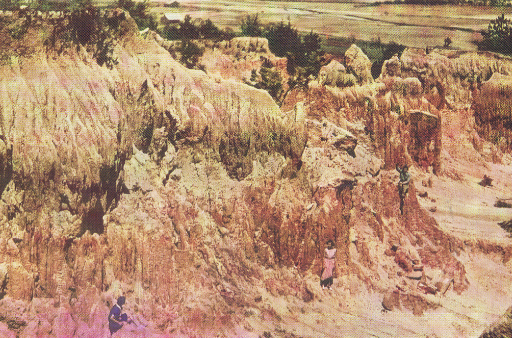
National Geographic, September 1937
Ongoing natural erosion formed deep canyons in the loose soil, uncovering the once hidden petrified logs
Erosion began in the tan colored Loess soil. The wind and the rain combined to nibble away at it. With each passing storm, more soil was washed away until small gullies began to appear. Over the years these forces enlarged the gullies until they widened and deepened into ravines. When the wind-blown soil had all been eroded and washed into the foot of the ravines, these forces began eating away at the lower layer, the reddish sands and silts of the Forest Hill formation, in which the old trees had become petrified or turned to stone.
The rain drops prodded out the grains of sand, until some of the stone logs became visible. Many had been broken into large pieces by the sheer weight of the deep, heavy layers of earth that rested on them. As the engulfing sands had been moved away from them, log sections tumbled down into the ravines revealing what we see today.